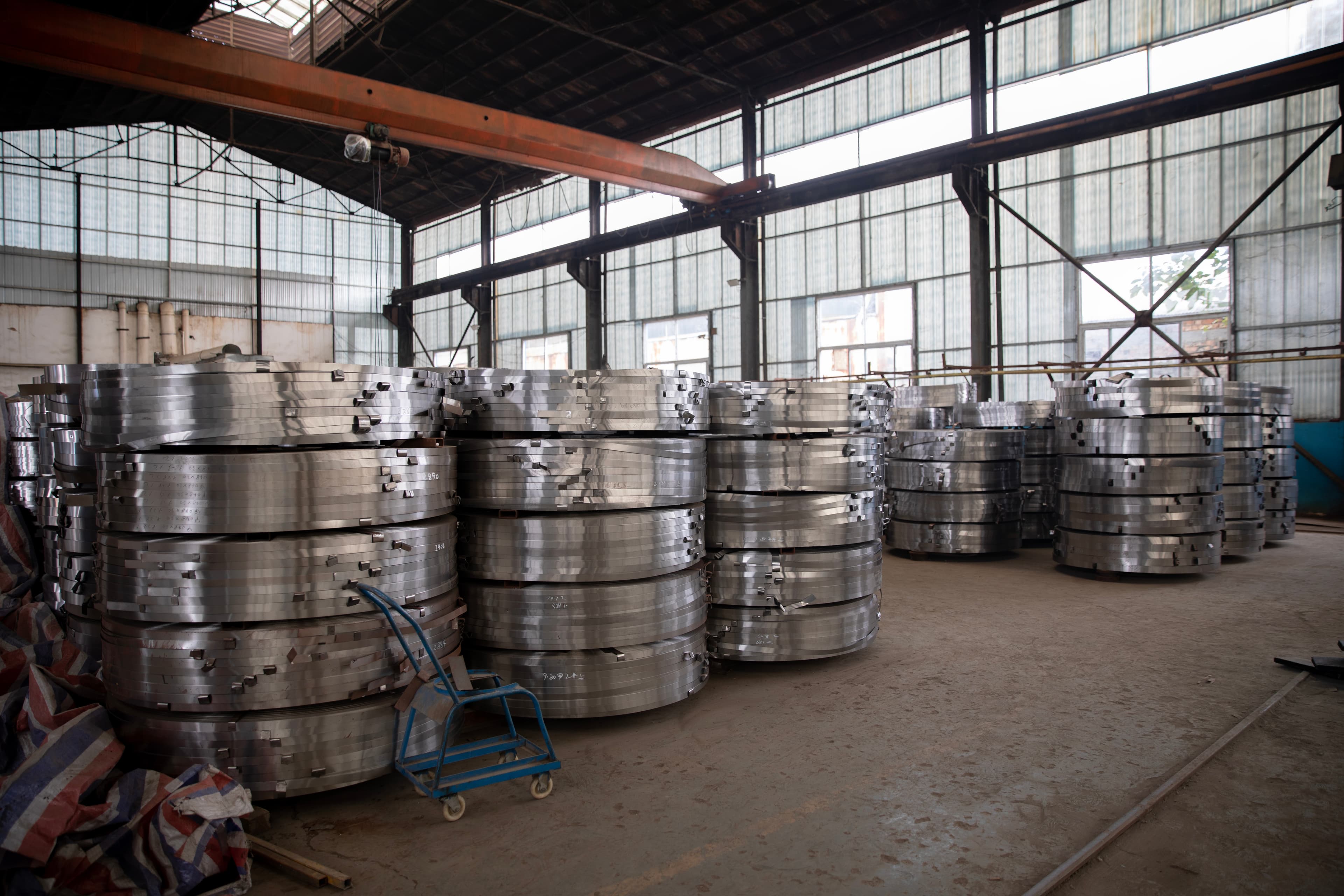
B2B buyers should require three layers of proof from Chinese steel suppliers: a valid management-system certificate, compliance with the exact product standard written into the order, and shipment-level inspection records tied to the lot that will actually ship.
For procurement teams buying galvanized steel wire or cable armouring steel strip, the point is not to collect certification badges for a slide deck. The point is to reduce specification drift, claim disputes, and delivery risk before loading.
Which certifications are baseline requirements for Chinese steel suppliers?
For most steel purchases, the baseline requirement is a current ISO 9001 certificate plus evidence that the product is being manufactured to the correct destination or industry standard. ISO 9001 matters because it shows the supplier runs a documented quality-management system that can be audited by an independent certification body.
By itself, however, ISO 9001 does not prove that a specific coil, spool, or shipment meets the tensile range, zinc coating weight, dimensional tolerance, or packing format required by the contract. Buyers should separate supplier-level certification from product-level conformity.
A current ISO 9001 certificate
Confirmation that the certificate scope matches the actual product category
The exact technical standard used for the order
Inspection and test data tied to the shipment lot
For galvanized steel wire and steel strip, the applicable standards may include ASTM, EN, JIS, GB/T, or YB/T references depending on the destination market and application. If the contract includes environmental or occupational safety requirements, ISO 14001 or ISO 45001 may also be relevant, but those are secondary controls.
Why ISO 9001 is necessary but not sufficient
ISO 9001 helps buyers evaluate whether the supplier controls documents, audits processes, records nonconformities, and runs corrective actions. But procurement failures happen when buyers stop there. A management-system certificate does not automatically guarantee coating weight, tensile strength, wire diameter, strip thickness, or packing configuration.
The practical test: can the supplier connect the certificate to the actual material, the actual standard, and the actual lot record? If the answer is no, the certificate is too generic to protect the buyer.
Public Zhongbo materials show the type of detail buyers should expect from any supplier, not only from one brand. Zhongbo official catalog materials show an ISO 9001:2015 certificate for the processing of cable materials and connect that system-level claim to product standards and measurable specifications.
The company states on its English site that production follows standards such as YB/T024-2021 and GB/T3082-2008, while its catalog lists cable armouring wire at 0.15-8.0 mm diameter, zinc coating from 15-825 g/m2, and tensile grades from 290-540 MPa or 1180-2160 MPa depending on the application.
What shipment-level documents matter more than a brochure?
The most important documents are the ones tied to the lot that will actually ship. Buyers should request a copy of the current certification, but they should go further and ask for shipment-specific inspection records and measurable data that match the purchase order.
Diameter or thickness
Tensile strength
Zinc coating weight
Coil or spool weight
Packing format and shipment marks
Lot identification and traceability record
Inspection or test report linked to the shipment
Independent pre-shipment inspection is one of the few controls buyers can still use before cargo leaves origin. It is valuable because it checks the material against technical specifications, documentation, packing condition, and contract requirements while corrective action is still possible.
Procurement managers should also treat traceability as a contractual control, not a nice-to-have. If the supplier cannot link the shipment marks to internal records, inspection data, and test results, it becomes much harder to resolve claims after arrival.
Mill-direct vs. trading company sourcing
Mill-direct sourcing is usually better when the buyer needs tighter control over standards, technical deviations, and shipment documentation. Trading companies can still be useful when the order mixes several products or when the buyer wants one commercial window for multiple factories. The mistake is assuming both models provide the same visibility into certification and process control.
Quality-system visibility
Mill-direct sourcing gives buyers higher access to factory certificates, process controls, and production scope. Trading company documentation is often filtered through a commercial layer, so buyers should ask whose certificate applies: the mill certificate or the trader certificate.
Technical change handling
Technical revisions are usually faster with the producing mill when coating, tensile, or packing specifications need adjustment. Through a trader, revisions may slow down because the factory and trader must relay changes. Buyers should require written confirmation from the producing mill.
Inspection access
Mill-direct sourcing makes it easier to arrange a factory audit or third-party pre-shipment inspection. Trading company sourcing can still support inspection, but the inspection location and responsible entity should be defined in advance.
Traceability
Traceability is stronger when lot records come from the producer. It can weaken if documentation is repackaged, so buyers should require lot-level reports tied to shipment marks.
Consolidation and logistics
Trading companies can be more flexible for multi-factory consolidation and mixed sourcing. Buyers should decide whether that convenience is worth lower technical visibility.
What Zhongbo Steel's public materials let buyers verify
Zhongbo is a useful case because its public materials expose several procurement-grade proof points that buyers can check. On its English website, Xinzheng Zhongbo Steel Products Co., Ltd. states that it was established in April 2003, is based in Zhengzhou, Henan, and operates on a 60,000 m2 site focused on armored cable steel strip and steel wire.
Its catalog publicly shows an ISO 9001:2015 certificate for cable-material processing, and its product materials publish standards and measurable wire data instead of relying only on broad marketing language. A credible supplier should make it possible to verify plant identity, certificate scope, application standards, measurable specification ranges, and traceability expectations before the first full-container order.
Buyer checklist
Verify that the ISO certificate scope matches the actual product being quoted.
Name the exact ASTM, EN, JIS, GB/T, or YB/T standard in the purchase order.
Require lot-level inspection data before balance payment or shipment release.
Define who controls corrective action before loading.
At a glance
Baseline system proof: ISO 9001 certificate with valid scope and audit continuity.
Product conformity: standards and measurable specifications must match the order.
Shipment release control: use pre-shipment inspection when claim risk is high.
FAQ
Is ISO 9001 enough to approve a Chinese steel supplier?
No. ISO 9001 is the baseline quality-system check, not the final approval decision. Buyers still need product-standard compliance, shipment-level inspection data, and pre-shipment verification tied to the actual order.
Should buyers ask for ISO 14001 or ISO 45001 as well?
Yes, if the contract includes environmental, ESG, or occupational safety requirements. But those certificates are secondary controls and do not replace product-standard compliance or lot-level inspection evidence.
What is the safest way to qualify a new supplier?
Start with a clearly defined specification sheet, require measurable acceptance criteria in the purchase order, and insist on pre-shipment inspection before release.
When does a trading company still make sense?
A trading company can make sense when the buyer needs mixed sourcing, consolidated shipping, or simpler commercial coordination, but certificates, standards, and inspection records should still trace back to the producing mill.
Procurement managers do not need more certificates. They need the right certificate, the right standard, and the right shipment proof. That is the difference between a compliant steel order and a costly dispute.
Need a supplier-side document pack before quoting? Ask for certificate scope, applicable product standard, inspection records, and traceability marks in the same request. That shortens qualification cycles and exposes weak suppliers early.
FAQ
Is ISO 9001 enough to approve a Chinese steel supplier?
No. ISO 9001 is the baseline quality-system check, not the final approval decision. Buyers still need product-standard compliance, shipment-level inspection data, and pre-shipment verification tied to the actual order.
Should buyers ask for ISO 14001 or ISO 45001 as well?
Yes, if the contract includes environmental, ESG, or occupational safety requirements. But those certificates are secondary controls and do not replace product-standard compliance or lot-level inspection evidence.
What is the safest way to qualify a new supplier?
Start with a clearly defined specification sheet, require measurable acceptance criteria in the purchase order, and insist on pre-shipment inspection before release.
When does a trading company still make sense?
A trading company can make sense when the buyer needs mixed sourcing, consolidated shipping, or simpler commercial coordination, but certificates, standards, and inspection records should still trace back to the producing mill.